


In contemporary engineering and product development, the control of cost does not start at the factory floor, but on the design table. Design to manufacturability (DFM) is a methodical engineering strategy that aims at streamlining product designs to enable them to be simpler, quicker, and less expensive to make.
Organizations that adopt DFM during the initial stages of the product development save material wastage, minimize the production cycle, avoid expensive redesigning as well as enhance the overall quality of the products. DFM does not learn about inefficiencies during production since it gets rid of them before it proceeds to production.
This guide will address the meaning of DFM, its importance, and how it will reduce the cost across the product life cycle in a strategic manner.
What Is Design for Manufacturability (DFM)?
Design for Manufacturability(DFM) is an engineering process whereby the product is designed in a manner that eases the manufacturing process and lowers the production cost as well as minimizing the complexities involved in assembling the product.
- DFM focuses on optimizing:
- Material selection
- Part geometry
- Tolerance levels
- Manufacturing methods
- Assembly processes
- Supply chain compatibility
The main goal is straightforward, to come up with product designs that are easy to produce without compromising performance or quality.
DFM combines design and manufacturing instead of separating them as it happens in other organizations. Engineers work with the manufacturing teams at an early level to make sure that the production is possible, cost efficient, and scaling.
Why DFM Is Critical in Modern Manufacturing
The design phase defines up to 70-80% of the total cost of a product. After the production has started, the cost reduction would be much more difficult and costly.
In the absence of DFM, firms are prone to:
- Excessive machining time
- Complex assemblies
- High scrap rates
- Production delays
- Rework and redesign costs
- Inefficiencies of the supply chains.
DFM minimizes the risks of this by working on manufacturability at an early stage.
Even minor inefficiencies can be greatly reduced in the competitive world that has a margin that is very narrow and thus enhances profitability. The simplified part can save minutes of machining time -but when it is thousands of parts, that is a significant saving.
DFM also enhances:
- Faster time-to-market
- Better product reliability.
- Better quality consistency
- Reduced operational risks
DFM, in the modern world of the global manufacturing environment, is no longer an option, but a strategic requirement.
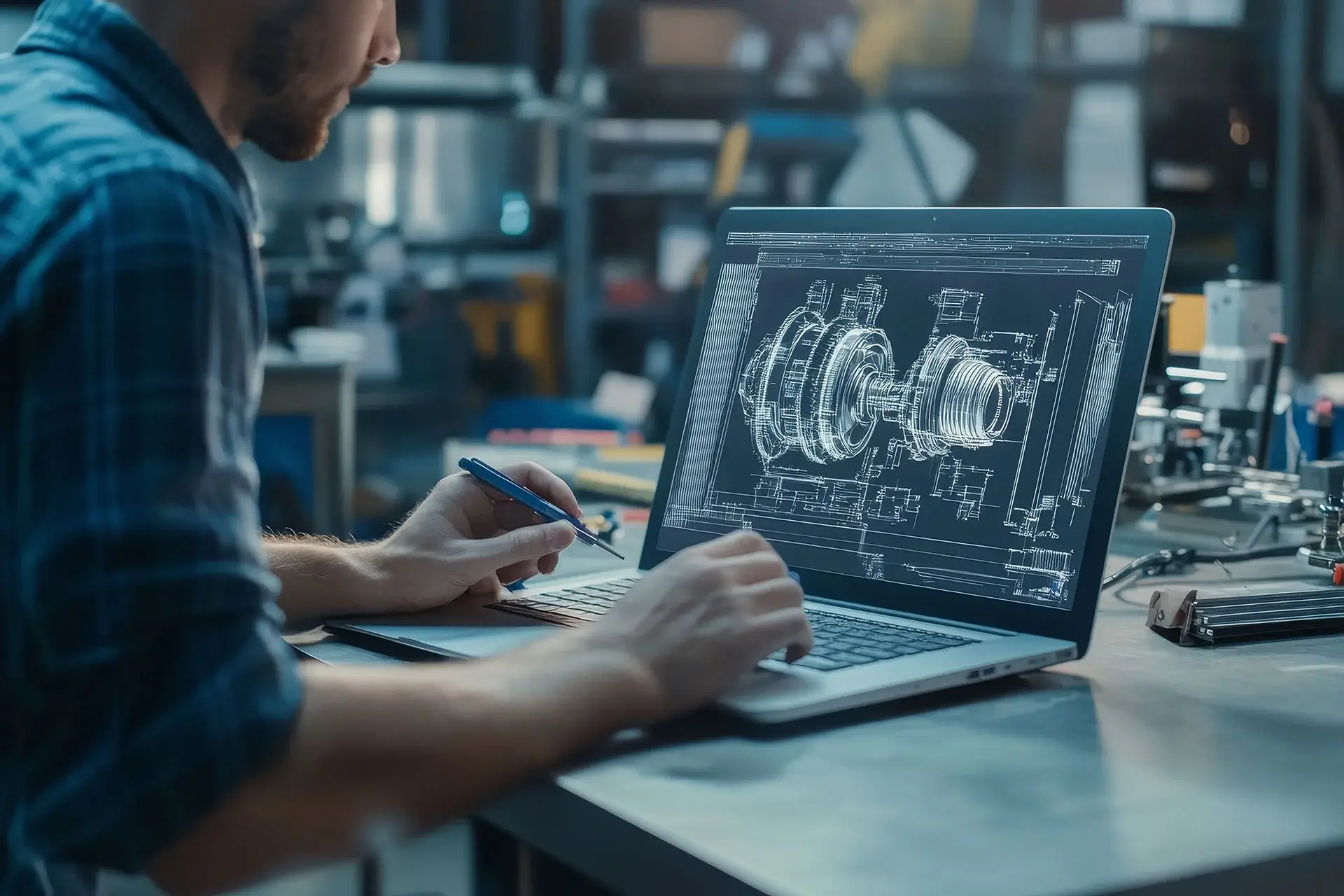
Core Principles of Design for Manufacturability
Successful DFM is based on engineered engineering principles. Although application in different industries can be different, there are some principles that can be used universally.
Simplify Product Design
The less the components a product has, the less the complexity in production. Reducing part count lowers:
- Assembly time
- Inventory requirements
- Fastener usage
- Error probability
Combined parts usually perform better in price and dependability than assembled parts.
Standardize Components
With standard materials, fasteners and hardware, the procurement costs and lead times are minimized. Custom parts enhance the risk in production and dependence on suppliers.
Optimize Tolerances
The use of tight tolerances greatly adds cost to machining. Tolerances can be as accurate as functional necessity permits - no less.
Select Manufacturing-Friendly Materials
The choice of the material influences the speed of machining, tool life, and finishing. The choice of materials that can be used in the processes minimizes wastage and processing.
Design to Assemble Most Effectively.
Accessibility, limited transition of orientation, and less variety of fasteners enhances assembly rates and decreases labor expenses.
By implementing such principles at an early stage, it will be easy to make the transition between design and mass production.
How DFM Reduces Cost Before Production Begins
DFM is essentially cost prevention as opposed to cost correction. This is how it yields quantifiable savings prior to commencing production:
Reduced Tooling Expenses
Custom tooling is often needed in complex geometries. The simplification of part design helps to remove the costly molds, fixtures, or machining devices.
Lower Material Waste
Minimal designs that are optimized reduce the amount of waste materials used and the scrap rate in the fabrication process.
Shorter Production Cycles
Diluted components have fewer machining processes that save time and energy on the machine.
Fewer Design Revisions
A close working relationship between design and manufacturing departments will save the expensive redesigns in the future.
Enhanced Supply Chain Performance.
The use of standard components in the process of design saves the procurement schedules and lowers the supplier risks.
Lower Labor Costs
Easy to assemble products demand less man-hours and less skillful labour.
DFM is proactive in ensuring that it eliminates accumulation of hidden costs of production.
DFM Strategies Across Different Manufacturing Processes
The various DFM considerations vary regarding various production methods. The successful DFM can adjust the principles of design depending on the manufacturing process.
CNC Machining
- Avoid deep, narrow cavities
- Minimize tool changes
- Use uniform wall thickness
- Minimize acute internal angles.
Injection Molding
- Keep the Thickness of Walls Constant.
- Design proper draft angles
- Wherever feasible, avoid undercuts.
- Simplify mold complexity
Sheet Metal Fabrication
- Reduce excessive bends
- Always have regular bend radii.
- Avoid tight corner cuts
- Preparation of sheet sizes.
Additive Manufacturing
- Optimize part orientation
- Maintain a small number of support structures.
- Reduce material overuse
- Should lattice structures, design where possible.
The design decisions should be in harmony with the manufacturing ability so as to maximise the cost efficiency.
Implementing DFM: Best Practices for Engineering Teams
Effective DFM implementation needs cross-functional working.
Engage in Manufacturing at an Early Stage.
The designs should be reviewed by production engineers at the early concept stages. Their experience does not allow them to make unrealistic designs.
Conduct DFM Reviews
Manufacturability centered design reviews are used to detect cost drivers prior to ultimate approval.
Apply Simulation & Digital Tools.
Current CAD programs and simulation systems enable engineers to:
- Examine stress distributions.
- Evaluate manufacturability
- Detect tolerance stack-ups
- Determine assembly conflicts.
Physical prototyping is reduced by digital validation.
Establish Feedback Loops
Design improvements should be constantly informed by production feedback. DFM has no conclusion; it is a continuous process.
Track Cost Metrics
DFM effectiveness can be measured by monitoring material consumption, machining, scrap change and such like defect frequency.
DFM should be integrated into organizational culture when established effectively instead of being a reactionary solution.
The Long-Term Business Impact of DFM
Design for Manufacturability does not only provide cost savings, it brings strategic benefits.
Faster Time-to-Market
When the manufacturing problems are minimized at the initial stages, the products transition a concept to a production faster.
Higher Product Reliability
Less complex designs minimize the failure points, making them more durable and satisfying to customers.
Greater Scalability
DFM ready designs can be easily transformed to high volume production.
Sustainable Manufacturing
Economical material use and minimum waste materialize the environmental objectives and legal requirements.
Cost Leadership Competitiveness
Companies that persistently use DFM are able to incur reduced production expenses without compromising on quality - enhancing their market stance.
DFM is a global economy that warrants efficiency and innovation, so when it comes to product development, having a risk-intensive process can be turned into a predictable and cost-controlled one.
Conclusion: Design Smart Before You Build
DFM has nothing to do with constraining creativity - it has to do with intelligent engineering.
When organizations consider manufacturing at the initial stages of the design process, they will avoid unwanted expenses, enhance production efficiency, and increase product quality.
The costliest issues in manufacturing are those that are found too late. DFM makes sure that they are resolved prior to the commencement of production.
Companies that embrace DFM:
- Reduce material waste
- Shorten development cycles
- Minimize production errors
- Improve profitability
- Enhance the overall competitiveness.
Design discipline is the starting point of cost control in the application of modern engineering. And by inclusion of DFM into the product development cycle, manufacturing becomes not only an efficient concept, but also strategically aimed at success.
Looking for expert-driven mechanical engineering solutions that deliver precision and performance? Visit Seashore Solutions to explore advanced services in machine design, simulation, CAD modeling, and industrial engineering support. Discover how their end-to-end expertise transforms concepts into production-ready systems with efficiency and reliability.