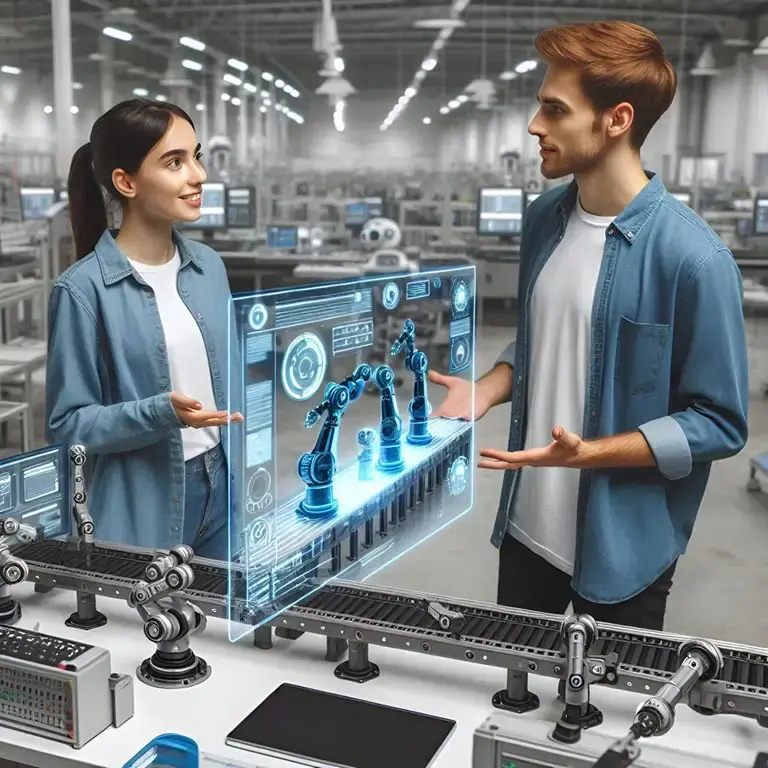



The production plants are reliant on machines, production equipment and mechanical systems in order to remain efficient. The components become worn out, aged, or the mother company ceases to provide them. That normally results in crashing down time, increased repair expenses, and shattered manufacturing timetables.
Reverse engineering is one of the good solutions to this issue. The reverse engineering allows companies to research on the already existing components, create accurate designs and manufacture alternatives in cases where the original specifications are absent. The modern equipment such as 3-D scanner, CAD, and digital simulation allow the manufacturers to extend the life of equipment and reduce the downtime.
This technique is of greater importance today to industries that are dependent on old or specialized machines where the spares are difficult to locate.
Understanding Reverse Engineering in Manufacturing
Reverse engineering examines a tangible item to get insight into the design and construction as well as the functionality of a product. Engineers examine the component and recreate the digital model, technical drawings, and specification of the component.
Reverse engineering is commonly applied in manufacturing when there is no documentation of the original design, the replacement parts are not available anymore, equipment needs to be upgraded, or it is necessary to improve the performance.
It consists of measuring the component, scanning its geometry using sophisticated tools and recreating the design in CAD.
The manufactures can then create other parts that are identical or even better than the original after the digital model is in place. This enables the organizations to keep vital equipment without having to rely on OEMs.
How Reverse Engineering Helps Extend Equipment Life
One of the biggest advantages of reverse engineering is its ability to extend the life of existing machinery. Many industrial machines are designed to operate for decades, but their components eventually wear out or become obsolete.
Instead of replacing the entire system, engineers can reverse engineer worn or damaged components and manufacture exact replacements.
This approach provides several benefits:
- Restores the functionality of aging machines
- Eliminates the need for costly equipment replacement
- Preserves legacy manufacturing systems
- Supports long-term operational reliability
For many industries, replacing large industrial machines can be extremely expensive. Reverse engineering offers a practical solution that allows organizations to maintain their equipment while minimizing capital investment.
Reducing Manufacturing Downtime Through Reverse Engineering
Downtime is one of the most costly challenges in manufacturing. When critical equipment fails, production stops, deadlines are missed, and financial losses quickly accumulate.
Reverse engineering helps reduce downtime by enabling faster replacement of unavailable or obsolete components.
Instead of waiting weeks or months for a replacement part from the original manufacturer, engineers can recreate the component locally using modern design and manufacturing tools.
This process allows companies to:
- Quickly reproduce damaged components
- Maintain continuous production operations
- Reduce dependency on OEM suppliers
- Improve maintenance response time
By having the capability to reverse engineer critical parts, manufacturers gain greater control over their maintenance strategies and equipment reliability.
Technologies Used in Reverse Engineering
Modern reverse engineering relies on advanced digital technologies that allow engineers to capture precise measurements and recreate highly accurate models.
Some of the most widely used technologies include:
- 3D Scanning: 3D scanners capture the geometry of physical components with high accuracy. The resulting digital data can be used to recreate the component in CAD software.
- Computer-Aided Design (CAD): CAD tools allow engineers to rebuild the scanned model and generate detailed design files that can be used for manufacturing.
- Computer-Aided Manufacturing (CAM): CAM systems convert digital models into machine instructions for CNC machining or additive manufacturing.
- Digital Simulation and Analysis: Simulation tools help engineers evaluate the performance of the recreated component and optimize its design if necessary.
Together, these technologies enable precise reproduction of complex mechanical components and improve overall manufacturing efficiency.
Improving Design and Performance with Reverse Engineering
Reverse engineering does more than simply recreate existing parts. It also provides an opportunity to improve the original design.
Engineers can analyze the component to identify design weaknesses, material limitations, or inefficiencies. By addressing these issues during the redesign process, they can develop enhanced versions of the component that perform better than the original.
Possible improvements may include:
- Using stronger or more durable materials
- Enhancing structural strength
- Reducing component weight
- Improving thermal or mechanical performance
These improvements not only extend equipment life but also improve reliability and operational efficiency.
Applications of Reverse Engineering in Modern Manufacturing
Reverse engineering is widely used across many industries where equipment reliability is critical.
Common applications include:
- Industrial Machinery Maintenance: Manufacturers use reverse engineering to recreate worn gears, shafts, housings, and machine components.
- Automotive and Aerospace Industries: Engineers analyze existing parts to improve design performance or recreate obsolete components.
- Legacy Equipment Support: Factories often rely on machines that are decades old. Reverse engineering allows them to maintain these systems without relying on unavailable spare parts.
- Custom Manufacturing and Product Development: Companies use reverse engineering to analyze competitor products, improve designs, and accelerate product innovation.
These applications demonstrate how reverse engineering supports both maintenance and innovation in modern manufacturing environments.
The Role of Engineering Expertise in Successful Reverse Engineering
This is because reverse engineering technologies are strong but need highly qualified engineering skills to be successful. Mechanical design, material science, manufacturing processes and performance requirements require the engineer to be aware of them.
It is imperative to make sure that the rebuilt component is accurate, modeled and well-validated to work in real-world conditions in a reliable situation.
Organizations may also ensure that the outcomes of the reverse engineering projects are of high quality and risk is reduced by collaborating with reputable engineering service providers.
Professional engineering support can be used by companies which aim to prolong equipment life, reduce downtimes, and increase mechanical performance. Seashore Solutions is a firm that provides high-technology services such as reverse engineering, CAD modeling, product design, and simulation to assist the manufacturers to optimize their equipment and production systems.
Conclusion
Reverse engineering has emerged as a useful tool to contemporary manufacturing companies that seek to improve on equipment life and reduce downtime. Re-creating and enhancing important parts will allow the engineers to continue to operate the old machines, lessen their dependence on the original equipment manufacturers, and ensure ongoing production.
Reverse engineering is facilitated by advanced tools such as 3 -D scanning, CAD modeling and digital simulation. They allow the producers to recreate complicated components in a precise manner.
In addition, this method allows the companies to optimize designs, enhance durability of components, and cut the costs of their maintenance in the long term.
Reverse engineering will remain vital as the manufacturing environments change. It maintains machinery dependable, spurs innovation and increases efficiency in operations in industries.